
The Benefits of Enrichment for Your Feline Friend
In our fast-paced, ever-changing world, it’s no surprise that stress is on the rise—for us and our pets alike. But what about our feline companions? While cats may seem self-sufficient and low maintenance, they too can suffer from stress, anxiety, and even depression when their environments fail to meet their needs. An enriched environment is crucial to maintain their health and happiness, and by understanding and meeting these needs, we can create a fulfilling space for our beloved cats. Let’s explore the importance of enrichment and how it can transform your cat’s well-being.
Why Enrichment is Essential for Cat Health
Cats are highly sensitive creatures, and a lack of stimulation can lead to a range of health and behavioural issues. When cats experience stress, their bodies release hormones that can cause inflammation, leading to conditions like cystitis and inflammatory bowel disease. Unhappy cats may also withdraw, display aggression towards humans or other pets, and develop behavioural changes. Providing enrichment activities can help prevent these issues, promoting both mental and physical health for our feline friends.
Is your cat stressed? Take my stressor audit to find out.
Why Indoor Cats Require Extra Attention
While all cats benefit from enrichment, it’s particularly crucial for those living indoors. Unlike their outdoor counterparts, indoor cats are limited in their ability to express natural behaviours such as hunting, exploring, and patrolling territory. Indoor cats rely on us to create an environment that allows them to express these instincts safely.
 Simple additions, like scratching posts, hiding spots, or puzzle feeders, can make a huge difference. These tools allow your cat to engage in instinctual behaviours, helping to reduce frustration and stress. For apartment dwellers or those on busy roads, indoor enrichment is key to ensuring your cat feels safe, happy, and stimulated.
Find out more about puzzle feeders through my ‘Think Outside the Bowl’ Campaign
The Five Types of Enrichment
A well-rounded approach to enrichment considers five key types: physical, sensory, occupational, social, and nutritional. While each is vital to a cat’s well-being, a balanced mix allows them to thrive. Let’s break down what each type involves and how it supports your cat’s happiness:
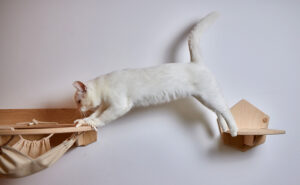
- Physical Enrichment: Cats need space to climb, jump, hide, and explore. A multi-level cat tree, window perches, and access to shelves can help satisfy this need, giving them the exercise and mental stimulation they crave.
- Sensory Enrichment: Stimulate your cat’s senses with a variety of textures, scents, and sights. Cat-safe plants, sensory toys, and scratching posts provide outlets for scent-marking and scratching, which are vital to a cat’s sense of security.
- Occupational Enrichment: Allow your cat to engage in activities that mimic their natural hunting behaviours. Puzzle feeders and interactive toys provide mental stimulation, letting your cat “work” for their food while satisfying their instinct to stalk, pounce, and chase.
- Social Enrichment: While cats are generally solitary animals, many enjoy social interaction with humans or other cats. Regular playtime and gentle petting sessions can help fulfil this need. For multi-cat households, it’s essential to provide enough space and resources to prevent tension and competition.
- Nutritional Enrichment: Offer a high-quality, protein-rich diet and consider feeding methods that mimic natural hunting behaviours. Puzzle feeders, for example, encourage cats to work for their food, adding a mentally stimulating component to their meals.
Creating a Cat-Friendly Space
Creating a cat-friendly home doesn’t require an overhaul, but rather thoughtful adjustments to ensure your cat feels comfortable and secure. Here are some essentials to consider:
- Space and Exploration: Provide areas for climbing, hiding, and resting. High vantage points and “bolt holes” give cats a sense of safety and control over their environment.
- Separate Resources: For multi-cat households, ensure there are enough resources—food bowls, water, litter trays, and sleeping areas—to avoid conflict. A good rule of thumb is to have one of each essential resource per cat, plus one extra.
- Opportunities for Natural Behaviour: Indoor cats still need to fulfil their natural hunting and scratching instincts. Provide a mix of toys and scratching surfaces and consider creating homemade activity feeders with household items for extra variety.
- Playtime: Contrary to popular belief, adult cats enjoy playtime too! Early mornings and evenings work best, as cats are most active then. Sessions of 3-5 minutes are ideal, as cats can tire quickly or lose interest.
Need some advice
An enriched environment is key to a cat’s physical and mental well-being. By making small changes, you can transform your home into a space where your cat feels safe, stimulated, and happy. If you’re unsure where to start, why not book a feline consultation? I can offer expert advice and help you create the perfect environment for your cat, whether they’re an indoor companion or an adventurous explorer. Get in touch with me today to give your cat the enriched life they deserve!
Email [opens new email]
Web contact form >>
Call: 07917094715
Comments