
Cat Key Resources – Food
Having already covered water and sleep in our Cat Key Resources series of blogs, it feels right to move on to food. However, this is a very loaded subject as there are many different options when it comes to fresh food, meat, content, wet vs dry and more. So, when I talk about cat food I am going to be discussing nutrition and also how to feed your cat.
At a basic level; protein and taurine
Cats need a high-protein diet as they are carnivores and in addition to this, they also need an amino acid called  Taurine. Taurine is essential for their digestive system, eyes, heart, and immune system. It is an amino acid they cannot reproduce or synthesise, so it must be included in their diet, which is why they can’t be vegetarians.
Top Tip: Weigh out your food. This ensures your cat is getting the right amount for their age and weight and can help stop obesity issues. Use scales or a cup and see the packet or ask your vet how much to give them in a day.
Commercial cat food
Due to a lack of legislation in this area, cat owners are very much at risk of being told by clever marketing what is best for their cats. In a quality protein diet, there should be a higher meat content, but not all cat food is produced equally, and some cat food like pouches may only include a meat content of 4%. Manufacturing also accounts for many types of cat food being produced with varying amounts of ingredients, so not all packets are the same. Dry food can also have its disadvantages as it can be very palatable and therefore lead to obesity problems.
Things like jelly, flakes, pâté, or different flavourings are all marketed at owners and not cats, you would never see a mouse or bird come with added extras or flavoured with tuna!
Ideally, make sure the ingredients of the food you are giving your cat have everything they need so you don’t have to add anything extra. A 50% dry and wet combination will help with water intake.
Little and often, with water
Living in the wild, cats would hunt and bring back prey for eating later. They would try to get little and often, 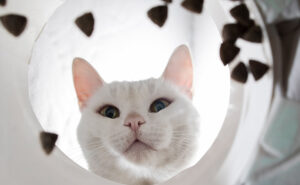 perhaps stocking some food if hunting didn’t go well and to ensure food is safe. The same can be applied to your cat, feeding little and often, in a puzzle feeder ideally and always ensuring they have a few sources of clean water placed a little distance from their food in a place they often wander past, such as a hallway or bathroom. Feeding may be difficult in a multi-cat household, see below if you require some help with this issue. Limit the treats you give so your cat doesn’t add on too much weight, especially with things like fish as these contain bones and fatty acids that are not good for day-to-day intake.
Puzzle feeding, a better way to feed your cat
Have you tried puzzle feeding? You may have seen the ‘Think Outside the Bowl’ campaign I launched a few years ago, and for good reason. Many of our cats are bored or anxious, maybe aggressive and may suffer from obesity. A great way to combat these behaviours and help your cat have a better relationship with food is to use a puzzle feeder.
 Puzzle feeding gives cats a challenge to obtain their food. Using their paws, tongue, nose, or a combination, they must retrieve the food through holes, containers, or openings. There are many types of feeders on the market, or you can make your own.
This helps to mimic the type of behaviour you would see in the wild and gives them stimulation to help relieve stress and boredom. It also gives them more time to feed at a gentle pace, the health benefits are huge, and I always hear great things from other owners who have made the switch.
Top Tip: a simple puzzle feeder can be made from cardboard boxes or tubes, old yoghurt pots or an eggbox.
Ensure the diet is right for their age
The most important time for nutrition is when cats are growing up and growing old. At these life stages, you will  need to tailor your cat’s diet. For kittens, those between 2-7 weeks, need to be exposed to different textures of food. This helps if, especially in the future, they require medical food as this is often wet-based, so a variety helps at this age. Senior cats may need a diet with added supplements to help with joint pain, bladder issues or arthritis.
Vet Check
As always, if you are worried about your cat’s health, if it is very skinny, if you are worried it is overweight, drinks too much, is sick often or has diarrhoea ensure you visit your vet for a check-up.
Nutritional advice
As a practising veterinary nurse, I am not able to endorse or recommend a particular brand of pet food, however, if you are looking for feeding or nutritional advice and would like some help please get in touch for a consultation. Simply let me know your cat’s issues, its age and its breed.
Cat Food Resources
You can find other resources about cat food here:
- https://thefriendlypetnurse.co.uk/have-you-heard-of-puzzle-feeding-for-cats/
- My Think Outside the bowl Campaign: www.thinkoutsidethebowl.co.uk
- The Pet Food Manufacturers’ Association or PFMA works to advance pet health and well-being with quality nutrition from a sustainable, progressive pet food industry. They have some resources about nutrition and obesity: https://www.ukpetfood.org/information-centre/pet-nutrition-hub/pet-nutrition-resources.html
- https://www.thesprucepets.com/good-food-ingredients-554371
- https://www.cats.org.uk/help-and-advice/diet/types-of-cat-food
Comments