
Cat Key Resources – Chemical interpretation to keep safe
Having discussed cats hunting ability and their need to play I have already highlighted how nothing has changed over thousands of years of domestication. From chasing prey to scratching, cats are complicated, and one other key resource is their need to scent mark their territory.
Cats are born with the ability to interpret scent profiles which get deposited in various ways. The ability to do this aids them in their everyday life as solitary survivors. Chemical communication, or mark-making, is interpreted by them, and once processed they decide what action to take.
Here are four examples of ways they communicate:
- Facial rubbing
- Scratching
- Urine marking
- Faecal marking
Facial rubbing
This is a familiarity marking for cats and aids as a security blanket. So, when you see your cat rub your legs, chairs, other household furniture, etc. they are depositing chemicals through scent glands. This means when 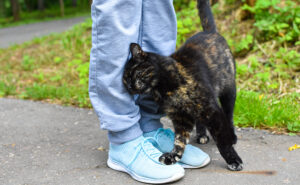 they re-enter that room or space, they feel secure. For this reason, don’t wipe these marks off! They may look brown or dirty but to your cat, they are almost a map of their territory. If you decorate or rearrange furniture they may feel worried or anxious as suddenly these safety smells are gone.
Some cats are more sensitive than others, while others are more confident, therefore mark-making should be encouraged, as it is a good behaviour to see, and will need to be topped up and repeated.
Top tip: if you are moving house collect these facial phenomes and rub them around the new house or furniture via a cotton cloth, or muslin.
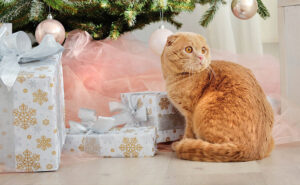 Christmas is a time for cat owners to be more mindful, especially with parcels, trees, moving furniture around, and people visiting. Allow for mark-making to help your cat during this busy time. (You can also read my blog about cats and Christmas)
Scratching
Scratching, as previously blogged, is a visual marker whilst also using phenomes on their feet. It shows presence and territory, both indoors and outdoors.
Did you know cats have a scent gland on their cheeks and paws? You should also never touch a cat when they look like they are grimacing. This is called a flehmen response and it is when they open their mouth a little like sneering. Your cat is fine and is trying to analyse a scent very intently through its nose and mouth. They might have discovered a new scent, so leave them to decode it.
Urine marking
Cats are clever with urine, for them, urine works a bit like a traffic light system. They can sense through the 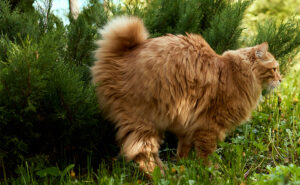 smell of the urine the rough age of the cat, its health, sex, and how long ago it left the mark. This acts as a traffic light, it shows the cat if it is safe to proceed, go on with caution, or, perhaps after 3-4 hours it is a green to go about. Cats can also hone onto specific cats, so they can tell it is a cat they know or a stranger to stay away from. Cats will spray up against bushes and gardens and neutered cats will also mark-make.
Faecal marking
Some believe the passing of faeces and the act of leaving it uncovered is an edge of territory marker. If you have a multiple-cat household, it may be one reason why one cat leaves their faeces uncovered. You can provide your cat with an outside toilet area.
Mark making in all the wrong places
There is a difference between mark-making by a happy cat and toileting inside. If your cat/s has a challenge or stressor this may lead to them marking in the house, and this shows something isn’t right. Medical reasons should be ruled out first before contacting me for a consultation: email zoe@thefriendlypetnurse.co.uk or get in touch by phone on 07917094715
Reading more about cats and their environment:
- https://thefriendlypetnurse.co.uk/how-to-help-your-cat-feel-more-at-home/
- https://thefriendlypetnurse.co.uk/optimizing-a-cats-environment/
- https://thefriendlypetnurse.co.uk/take-my-new-cat-stress-quiz/
- https://thefriendlypetnurse.co.uk/welcoming-your-new-cat-to-the-family-home/
- https://thefriendlypetnurse.co.uk/cat-behavioural-consultations-a-brief-overview/
Comments