
Pet Obesity as part of Veterinary Nurse Awareness Month
A veterinary nurse has a wealth of information and knowledge about pets health issues, and one of the things I see the most at the veterinary practice I work at is pet obesity. The majority of us love our pets very much, but  sometimes we spoil them with that ‘little treat’ that ‘extra snack’ or the leftovers from our dinner. Combine this with a lack of exercise, especially with the pandemic and the great British weather, and you have the recipe for weight gain, which can lead to pet obesity.
In the 2020 PDSA paw report survey of veterinary professionals, 52% identified obesity as one of the top five welfare issues that need to be addressed in the UK dog population and 44% said it was a top issue vet professionals would choose to solve tomorrow.
Tackling Pet Obesity
If you love your pet you will want them to be healthy, happy and able to live a long life at your side. Obesity can lead to further medical conditions such as arthritis, back problems and breathing problems, to name a few. Obviously overweight pets are more likely to develop such problems and therefore be more costly when it comes to vet’s costs and treatment. However, veterinary nurses like myself can aid you and your pet, to help get your pets weight under control. Veterinary nurses can offer support with:
- Weighing your pet and understanding a normal body condition score
- Food measurements and portion control
- Exercise ideas and ways to entertain your pets without treats
- Help with the type of foods your pet should be eating, or switching to other foods to help combat weight gain
- Understanding your pets breed, shape and ideal body weight
According to a survey by Burgess Pet Care of 500 pet owners 76% of pet owners do not know or are unsure about  the ideal weight range for their pets.
Cat Obesity
One way to help your cat with weight loss is to introduce a puzzle feeder. This can be done gradually and without much expense. Puzzle feeding challenges a cat to obtain their food in a simple but effective way, mimicking the way they would have to work for their food in the wild. They can be for any cat of any age and with dry or wet food. A puzzle feeder can be made at home using items from your recycling such as cardboard trays, yoghurt pots and tubes. Visit, Think Outside the Bowl for some ideas on how to build a puzzle feeder yourself.
Dog Obesity
Dogs need to move about, a lot! Quite often weight gain in dogs is due to lack of movement and not moving around as much, so the food they eat isn’t burned off. Your dog should have a good figure from above and have ribs that are not readily visible but easily felt. Knowing your dog’s weight, size, breed and age will help determine how much and how often it should be fed, but exercise is key to this equation.
Rabbit Obesity
As with cats and dogs, knowing your rabbit’s breed and age will help you to know how much to feed it, but also playtime is key. Rabbits need an active lifestyle to run, hop, dig, hide, forage and jump, ideally with indoor and outdoor areas to get those feet working, as a wild rabbit would run five miles a day!
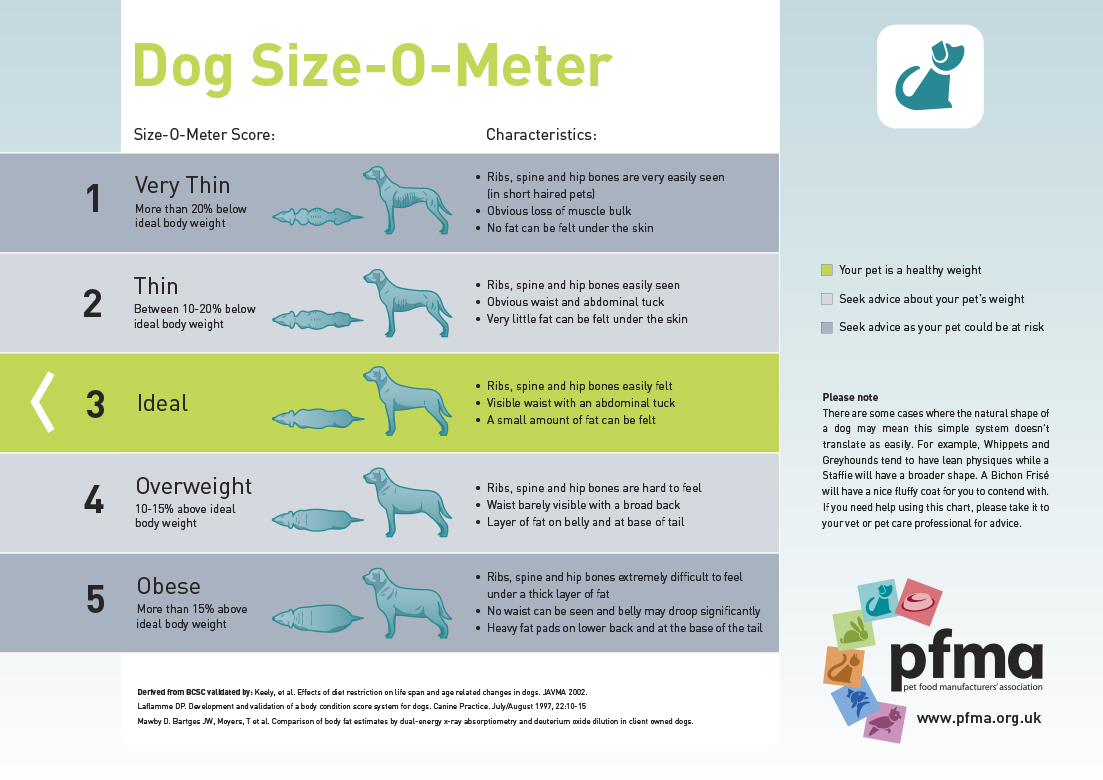


You can see the full Size-O-Meters on the PFMA website.
Preventative Pet Healthcare Tips:
- Practise portion control, follow the instructions and always phone the food manufacturer if you are unsure
- Give them good quality food and food that is appropriate for their age and breed
- Make sure they are getting plenty of exercises
- Don’t give them too many treats, if you do choose low-calorie ones and only little pieces.
Speak to your vet if you are struggling with your pet’s weight or if the weight gain has been sudden.
Contact me for more help
If something on here has resonated with you, get in touch:
- webform
- Find me, follow and comment on Facebook and Instagram
- See more about puzzle feeding for cats through my campaign ‘Think Outside the Bowl‘
Comments