
Can you tell, is your dog happy or sad?
Recently I wrote about the socialisation of puppies and tips for choosing a dog walker which both highlight the wellbeing and happiness of lockdown puppies and  also dogs that need exercise. But how can you tell if your dog is happy or sad? Well, they are a lot like us when it comes to body language and signalling.
Here’s a quick guide:
Signs of a happy dog:
- Relaxed body language
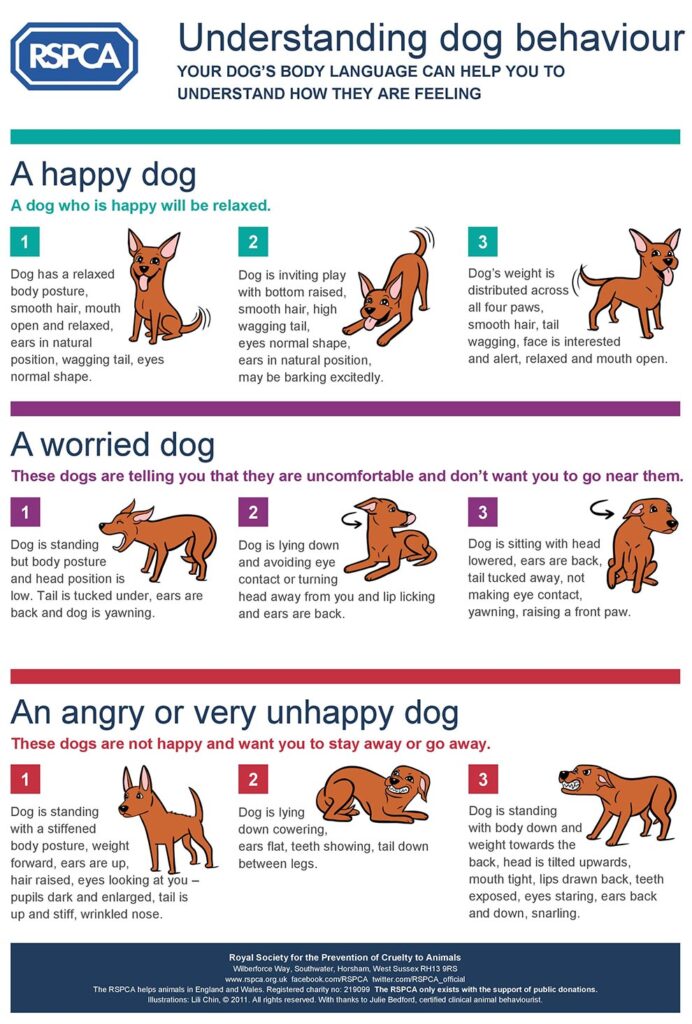
Our eyes can give away a lot about our mood, the same as a dog. Learn to read when they change. If they are open and bright, or so-called ‘soft eyes’ with their mouth almost looking like a smile, they are content. The same with body language and ears. Relaxed in posture, loose shoulders and floppy ears your dog is most likely feeling super chilled. - Playful
A happy dog may wish to play. They may leap about, wagging their tail which may move their whole body and their bottom. A happy dog will usually be well behaved and have a good appetite. Sometimes they will roll over, wriggle and show their belly and tongue.
Signs of an unhappy dog:
- Tail, Body, Ears
A low or tucked in tail may show stress. A slow wag or no wag is all the sign of an unhappy dog, feeling fear or worry. Along with a body posture that looks to be tense or shrinking away with a low head. Ears will be back as if pinned back.
 - Depression
Disinterest in food and playtime can be a sign of unhappiness. If your four-legged friend is eating more or less than usual, hiding, unable to sleep or maybe excessively licking or chewing then you should consult your vet or book a check-up.
Signs of aggression
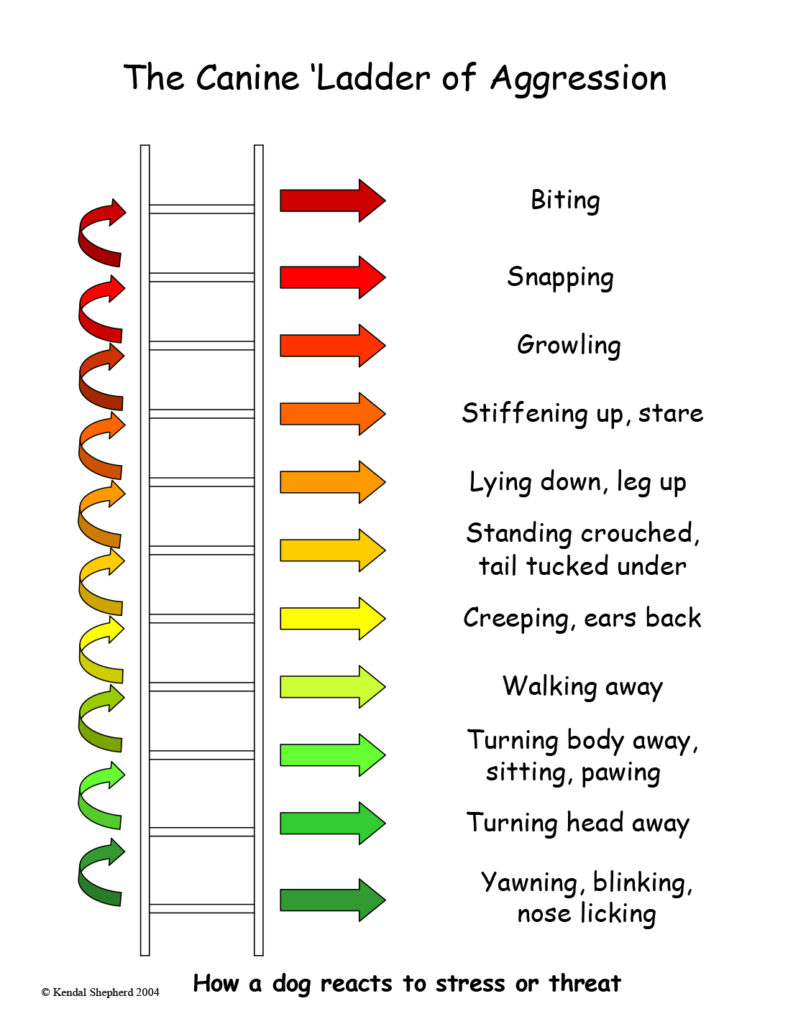
If your canine is feeling too stressed or finds someone or something a threat, signs of 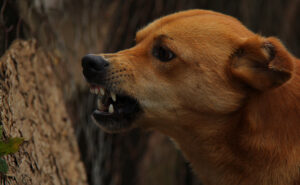 aggression can be shown as an escalation via ‘the ladder of aggression’. First devised in 2001 it shows how body language and gestures can lead further up the ladder and escalate. Understanding these can help to dissipate a situation. The ladder is shown below, and you can out more about it here: www.kendalshepherd.com/the-canine-commandments/ and more body language can be found here on the RSPCA website.
Comments